
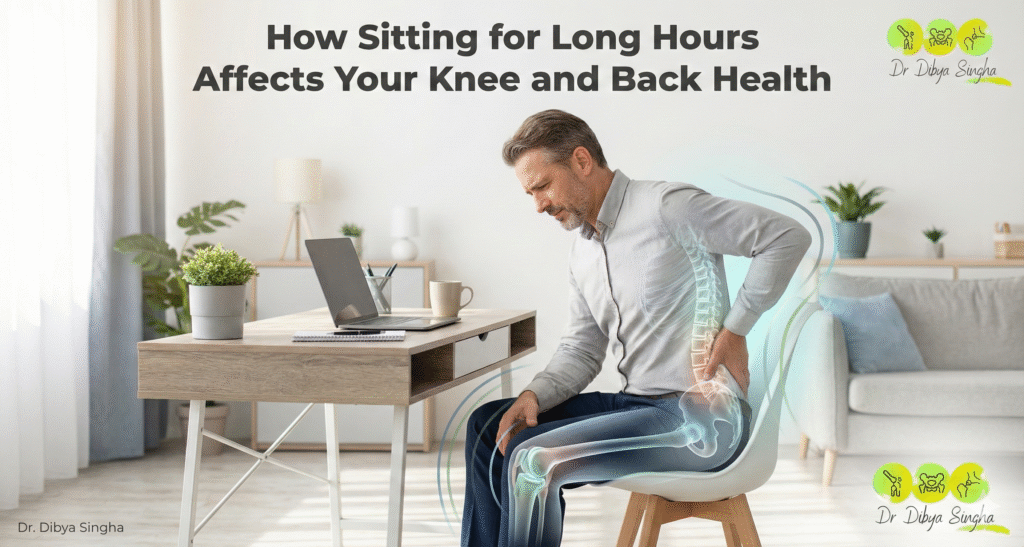
In today’s digital lifestyle, many of us spend long hours sitting at desks, working on computers, or scrolling on our phones. While sitting may feel comfortable, prolonged sitting can silently damage your knees and back, leading to pain, stiffness, and long-term orthopedic problems.
At Dr. Dibya Singha’s Orthopedic Clinic, we commonly see patients whose joint and spine issues are linked to poor sitting habits. Here’s how long hours of sitting affect your knee and back health—and what you can do about it.
1. Increased Pressure on the Lower Back
Sitting for extended periods places continuous pressure on the lumbar spine. Poor posture, slouching, or lack of back support can compress spinal discs, leading to:
Lower back pain
Muscle stiffness
Disc degeneration over time
This can eventually cause chronic back issues if not corrected early.
2. Reduced Blood Circulation to the Legs
When you sit for long hours without movement, blood flow to the legs decreases. Poor circulation can cause:
Knee stiffness
Muscle fatigue
Swelling in the legs
Increased risk of joint discomfort
Regular movement is essential to keep your joints nourished and healthy.
3. Weakening of Muscles Supporting Knees and Spine
Prolonged sitting weakens important muscle groups such as:
Core muscles
Hip flexors
Thigh and glute muscles
Weak muscles fail to support your knees and spine properly, increasing the risk of pain, instability, and injuries.
4. Knee Joint Stiffness and Cartilage Stress
Keeping your knees bent for long periods reduces joint lubrication. Over time, this may lead to:
Knee stiffness
Difficulty standing after sitting
Accelerated cartilage wear
Higher risk of early osteoarthritis
5. Poor Posture Leads to Long-Term Damage
Incorrect sitting posture—such as leaning forward or crossing legs for long periods—puts uneven stress on joints and the spine. This can cause:
Misalignment of the spine
Chronic knee pain
Neck and shoulder strain
How to Protect Your Knee and Back Health
Here are simple orthopedic-approved tips to reduce the effects of long sitting hours:
✔ Take Frequent Breaks
Stand, stretch, or walk for 2–3 minutes every 30–45 minutes.
✔ Maintain Proper Sitting Posture
Keep your back straight, feet flat on the floor, and knees at hip level.
✔ Use Ergonomic Support
Use a chair with lumbar support and keep your screen at eye level.
✔ Strengthen Your Muscles
Regular exercises targeting the core, hips, and legs help support joints.
✔ Stay Physically Active
Daily walking, stretching, or physiotherapy improves flexibility and circulation.
When Should You See an Orthopedic Doctor?
Consult an orthopedic specialist if you experience:
Persistent knee or back pain
Difficulty standing or walking
Numbness or tingling in the legs
Pain that worsens after sitting
Early diagnosis can prevent long-term joint and spine damage.
Expert Orthopedic Care in Bhubaneswar
If long sitting hours are affecting your knee or back health, expert help is just a call away.
📍 Dr. Dibya Singha’s Orthopedic Clinic
Besides SBI ATM, Acharya Vihar Square, Acharya Vihar–Jaydev Vihar Road,
Bhubaneswar, Odisha – 751022
📞 Phone: +91 9439537777, +91 9439018585
📧 Email: drdibyasinghadas@gmail.com
